
Thursday, November 10, 2011
Would You Like Some Cyanide with that?

Wednesday, November 9, 2011
Moving Forward and Back

This is the Tsunami by Hokusai which was printed is a very interesting way by the Japanese people. They used wood block printing to make this picture of a wave. What is wood block printing?
Tuesday, November 8, 2011
Palm Fronds
 "Oh, and bring something to write on!" How many times have you heard that phrase? Did you ever think to bring something other than paper? Of course not! That's what paper is for! Not once did it even cross my mind to bring a clay tablet or an animal skin, but originally, that's what people wrote on! People used the resources that they had at hand. And for India, that meant palm fronds.
 By some estimates, palm leaf books originated in India around fifteenth century BC. Tree leaves were used to record important documents like Buddhist scriptures, law, biographical information, and Sanskrit literature.
 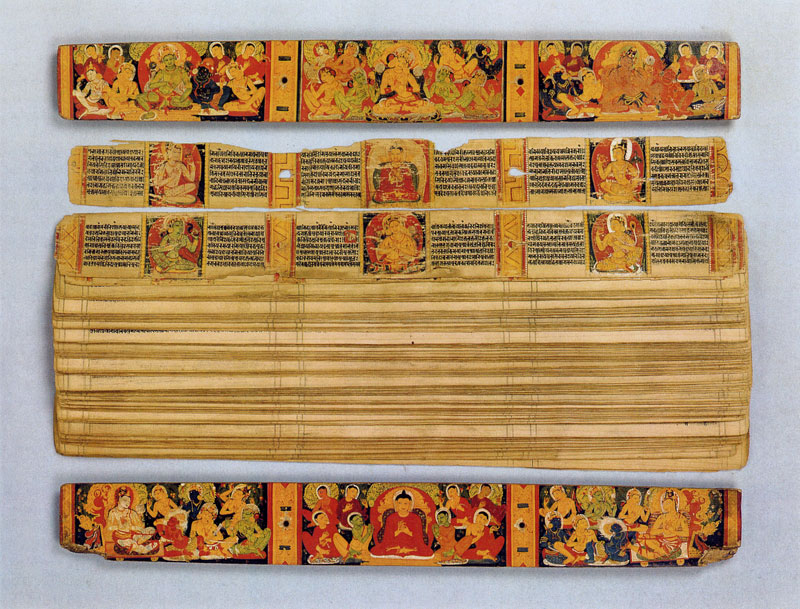 Palm leaves are flattened, dried and smoothed in preparation to make a book. Letters are inscribed by using a needle-like instrument that cuts into the surface. The writing is not all that visible before it is covered over with soot or pigment mixed with oil. They can then be illustrated (some with intricate paintings) and strung together. Two holes are bored though the center of the leaves to bind the book together with a cord. ChinaView shows the process of creating a palm leaf book with a series of pictures. (I highly recommend it!)
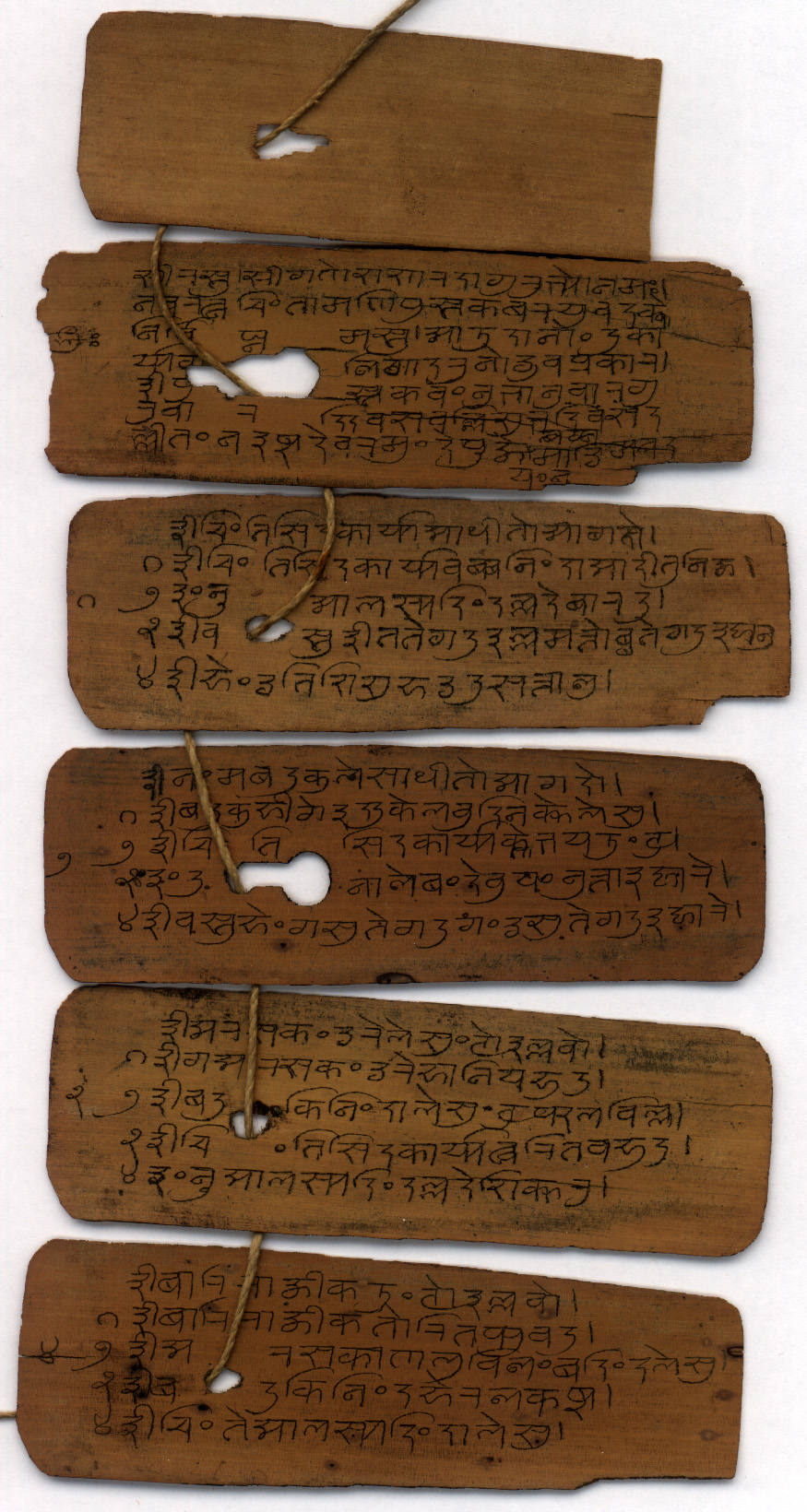 |
| Colombia University is trying to identify this text. |
Unfortunately, these beautiful books decay rapidly. We have very few surviving copies of palm frond books and those that we have really aren't all that old. Some of them remain untranslated. Colombia University has requested help online to identify and translate an old text written on palm fronds. Even today it is hard to translate some of these old languages because they simply are no longer in use. We lament the loss of these wonderfully crafted texts. I suppose that palm book making has been abandoned because of their short shelf life and the difficulty of making them.
 What does the future hold? With the advent of e-books, printed books have become increasingly less popular. Now you can carry around an entire library in your bag! I patiently wait for the day that museums will put my text books on display and everyone will marvel over the fact that we wrote on paper. The day is ever near that the phrase "Oh, and bring something to write on" will no longer refer to paper.
Friday, November 4, 2011
Dear Diary...
In keeping with the last few weeks, I have
decided to again continue research into the history of book writing. While I was researching, I had the idea that
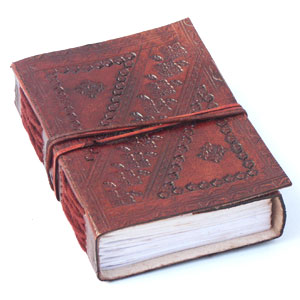
journal writing must have been an interesting topic in the past; with books and paper so hard to come by, I couldn't imagine that people would just go to the store and buy a blank notebook, so I started to do some digging. This week's post is the results.
Thursday, November 3, 2011
To Write or Not to Write
So for this post I'm going to deviate a little bit from the civilization I've been covering, but I think it's appropriate given what we've been talking about in class. (But the writing that I'm talking about was written in reformed Egyptian so its kinda almost related)

Today in class we touched briefly on the characteristics of the civilizations that some of us have been studying that did not have written languages. It's difficult to determine why they didn't develop such a system, but the effects of that lack of development are blatantly obvious. We know very little about those without a writing system, and their societies do no appear as advanced as their writing counterparts, (In most cases, barring the Incas who appear to be an exception to the rule). The Book of Mormon gives a perfect example of the different paths civilizations might take depending on their development (or use) of a written language. Keep reading after the jump to find out more!

Today in class we touched briefly on the characteristics of the civilizations that some of us have been studying that did not have written languages. It's difficult to determine why they didn't develop such a system, but the effects of that lack of development are blatantly obvious. We know very little about those without a writing system, and their societies do no appear as advanced as their writing counterparts, (In most cases, barring the Incas who appear to be an exception to the rule). The Book of Mormon gives a perfect example of the different paths civilizations might take depending on their development (or use) of a written language. Keep reading after the jump to find out more!
Wednesday, November 2, 2011
Japanese Literature
Ancient Japan did not have its own written language until the Kanji was introduced by the Chinese as I pointed out in a previous post. Since the Japanese originally took their language from the Chinese their first works of literature had alot of the Chinese writing style once they started writing about Japan.

Tuesday, November 1, 2011
Maps: Shrinking the World

With the advent of writing, the world suddenly got a lot
smaller. People no longer depended on first-hand experience or word of mouth to
know about far away places. People depended on maps.
Subscribe to:
Comments (Atom)