We inherit many things from our
parents. In the process of growing up, we learn to speak their language. We
mimic their actions, striving to become like them. We gain this folk knowledge
from our parents without needing to be taught explicitly. We simply learn from
their example. Perhaps most importantly, we construct our beliefs according the
values taught by our parents. Without question, we accept the religion of our
fathers. It’s only after we are grown and we enter a larger world that we
realize the variety of religious options that exist. Worldwide there are
hundreds of religions that have been preserved throughout the years by oral
tradition. Arguably, these religions have thrived only because they have been
passed down orally. In fact, oral knowledge has had a more powerful effect upon
spirituality and religious practice than any other type of knowledge.
Showing posts with label oral knowledge. Show all posts
Showing posts with label oral knowledge. Show all posts
Wednesday, December 14, 2011

Tuesday, December 13, 2011
Knowledge Needed for a Nation
Throughout history nations have come to be and passed by, leaving their mark on existence. Some left legends of grandeur, while other left nothing but their bones to be found by others. Traditions have been passed down mouth to mouth; some nations have left scrolls and pictorial scripts. While others left only remnants of tools and craftworks for a clue about their ways of life. What helped these nations who thrived and chose to do more than just exist to become the beacons of knowledge? These nations became so much more because they were built on a foundation that knew how to purvey their knowledge from one form to another.
Reinventing Knowledge: The Final Post

As this semester has gone on, my ideas about knowledge have
constantly been changing. Each new unit, blog post, and in class discussion
gave me new insights on the topic, and standing at the end of our journey I
have come to a conclusion. The ability to express our thoughts through spoken
word is the most significant advance in the communication of knowledge in human
history, and this oral knowledge is the basis of knowledge in all of its other
forms.
And So It Ends
Folk Knowledge
Self-Directed Learning:
For me, folk knowledge is anything that is learned outside of the classroom. I focused my initial studies on symbols and their meanings. I noticed that the culture greatly influenced a person's understanding of symbols. Also, I learned to knit. Something that I never expected to learn to do. In fact, my roommates were quite shocked when they found me sitting at my desk with the purple knitting needles in hand. (maybe they were even more shocked by the "lengthy" scarf at the end of the needles.)
For me, folk knowledge is anything that is learned outside of the classroom. I focused my initial studies on symbols and their meanings. I noticed that the culture greatly influenced a person's understanding of symbols. Also, I learned to knit. Something that I never expected to learn to do. In fact, my roommates were quite shocked when they found me sitting at my desk with the purple knitting needles in hand. (maybe they were even more shocked by the "lengthy" scarf at the end of the needles.)
Monday, December 12, 2011
Oh, How Far We've Come
Preliminary Blog Post

Let me start off by saying I hope you're all doing well with your exams and not stressing out too much! I know for me as a new freshman at BYU this is definitely a learning experience! In preparation for our "salon" tomorrow, here's a look at some of the great work our class has done over the course of the semester.

Let me start off by saying I hope you're all doing well with your exams and not stressing out too much! I know for me as a new freshman at BYU this is definitely a learning experience! In preparation for our "salon" tomorrow, here's a look at some of the great work our class has done over the course of the semester.
Tuesday, October 18, 2011
Sanskrit: The Priestly Tongue
Sanskrit is an oral language and has no written script of it's own.
What? Then how is it written? Well, with any style of script really. Some examples are shown below.
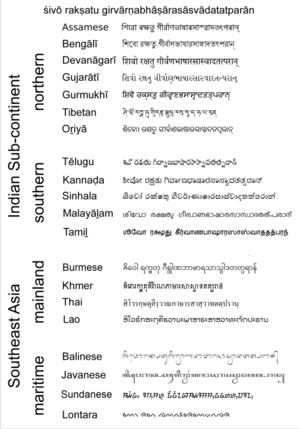 |
| Sanskrit can be written in a variety of scripts |
Monday, October 10, 2011
Road to Success
"The government that seems the most unwise,
Oft goodness to the people best supplies;
That which is meddling, touching everything,
Will work but ill, and disappointment bring."
Oft goodness to the people best supplies;
That which is meddling, touching everything,
Will work but ill, and disappointment bring."
- Laozi (Tao Te Ching section 58)
Friday, October 7, 2011
Quoting the Iliad
Let me start by saying that I can take no
credit for finding someone to interview.
After my best efforts, I had found a few people who qualified as people
I could interview, but for various reasons, I was unable to set any kind of
appointment with them. Wednesday
morning, discouraged, I asked in my morning prayer for help finding someone to
interview. My first class that morning
was Book of Mormon with Doctor Seely, and during our class, that discussion
ended up (somehow) on oral functions in the Book of Mormon, and Brother Seely
actually recited the introduction to the Iliad in Greek. Talk about answers
to prayers, right?
 |
| (This is a reconstruction; Minoan palaces don't look like this anymore.) |
Thursday, October 6, 2011
Lost in the Sand

The old saying goes, "You don't know what you don't know..." And when it comes to the ancient Kush of the Southern Nile river valley, what you don't know is quite a bit. I've scoured numerous sources, other blogs, newspaper articles, books, you name it, and I've found that the common theme with their take on this once powerful political force, is how much is left to be discovered. Here's a video that helped me gain a better understanding of this than getting lost in the text of dozens of written articles. (At least for me, an example of an advantage of oral communication over written forms)
Tuesday, October 4, 2011
Law and Religion - Indivisible in India

Last week I posted about my findings while reading from the
Mahabharata, an ancient epic poem written in India that contains key beliefs of
the Hindu culture. I dedicated this week to reading from the Bhagavad-Gita, a sacred scripture taken
from the Mahabharata that is so important to Hinduism that it is often treated
as a free standing text. The poem recounts a conversation between Lord Krishna
(later revealed to be the Supreme Being himself) and a prince named Arjuna who
questions the war he’s fighting against his own cousins. As they stand on the
battlefield with both sides ready for conflict, Lord Krishna (often referred to
simply as “the Lord”) teaches Arjuna his duties as a warrior in the caste
system of India and also instructs him on how to live a righteous life. As
such, this text allows us to have a better understanding of Hindu theology and
the caste system of ancient India.
Friday, September 30, 2011
Effectively Ending a Culture
How do we know anything about a culture that
once almost completely disappeared? Limited
sources of information make it difficult to define the culture with any
accuracy. It just so happens that the
culture I am going to discuss today is such a culture: the Minoan civilization,
which disappeared more than a thousand years before the beginning of the
Christian era.

Thursday, September 29, 2011
Politics of the Kush (and not the kind from a Dr. Dre song)
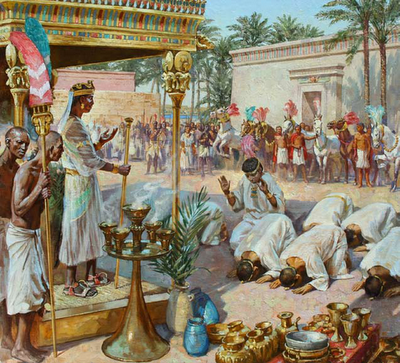
If you're like me, you might not be terribly familiar with the Kush people of Africa, so here's a bit of background... the Kush civilization was a group located in the South of the Nile River valley, mostly in what is the modern day country of Sudan. For most of it's history it was the generally accepted belief that the Kushite culture was a result of the expansion of Egyptian rule into that area, but more recent discoveries in the latter half of the 20th century showed strong evidence that a thriving culture culture existed here prior to the First Egyptian Dynasty, and might have been a very influential force in the development of the Kemites. The Kush Civilization had rich architectural achievements, flourishing trade, a strong belief in divine kingship, and even matriarchy. They were under Egyptian rule for several centuries, but at their high point the Kingdom of Kush, based in Meroe, took control of Kemet and had a very prosperous dynasty of Kushite Pharaohs. But what made political landscape of the Kush kingdom unique?
Tuesday, September 27, 2011
Persuading Death (Exploring the Mahabharata)
 Those who have a way with words set themselves apart from those who don't. Aptitude for speech and reason gives power to those who possess it. Power to entrance those who hear their voice and fill their souls with emotion - pain, joy, sadness or excitement. Power to convince others to do or believe what the speaker wants. This is the power of rhetoric.
In fact, with enough practice and skill, one can talk their way out of almost anything. But have you ever heard of someone who could talk their way out of death itself? In the Mahabharata, a virtuous woman does just that.
Monday, September 26, 2011
Ni Hao
The Chinese language has often been coined one of the most difficult languages to learn and speak. Not only are there thousands of characters one would need to learn, the language itself is tonal and uses different inflections than the English language.
Other than being a language that dates back centuries, Chinese has evolved to become one of the forefront languages to learn in today's world. But even before its evolution, the language was still a great influence in the ancient dynasties.
Other than being a language that dates back centuries, Chinese has evolved to become one of the forefront languages to learn in today's world. But even before its evolution, the language was still a great influence in the ancient dynasties.
Subscribe to:
Posts (Atom)